Aroma Branding in Singapore: Why a Pleasant Smell Isn’t the Same as a Brand Scent

Fragrances by drom, MunichFormulated within the IFRA StandardsBased at 9 Raffles Place

Key takeaways
- Aroma branding is the deliberate use of a scent as part of a brand’s identity, so customers recognise the brand by smell.
- A pleasant smell is not a brand scent: a brand scent is created for one brand, used consistently and recognisable as yours alone.
- The techniques are a signature scent, consistent ambient scenting, zoning, product and packaging scenting, and gifts.
- Scent Marketing Singapore builds aroma branding programmes with fragrances created by drom.
Aroma branding is the deliberate use of a scent as part of a brand’s identity, so that customers recognise the brand by smell the way they recognise its logo or colours. It is sometimes called aroma marketing, scent branding or fragrance branding. The key word is deliberate: a pleasant smell in a shop is not a brand scent. A brand scent is created for one brand, used consistently everywhere the brand appears, and recognisable as that brand’s alone.
If you’re considering a scent for your brand, our retail scent marketing and hotel scent marketing services are the usual starting points. This article explains what separates aroma branding from simply making a space smell nice.
Why a pleasant smell isn’t the same as a brand scent
- It isn’t distinctive. Popular library scents such as white tea or fresh linen are used by thousands of businesses. Customers can’t link them to you.
- It isn’t consistent. If the scent changes between outlets, or between refills, it never becomes recognisable.
- It isn’t connected to anything else the brand does. A brand scent reflects the brand’s values, design and customers. A pleasant smell reflects whoever chose it.

We explore the idea of a scent identity further in what is a scent identity.
Aroma branding techniques
A signature scent
The foundation. A fragrance composed for the brand by a perfume house, from a brief that describes the brand, its spaces and its customers. See how to create a signature scent for your brand.
Consistent ambient scenting
The scent is diffused at the same, carefully set level in every location, usually through nebulizing units or the building’s ACMV. Consistency is what turns a fragrance into a cue customers recognise.
Zoning by touchpoint
Entrances carry the welcome; fitting rooms, treatment rooms and service areas may carry a softer version or none. Scent should support the customer journey, not follow it into every corner.
Product and packaging scenting
Scented packaging, printed materials and retail products extend the brand scent beyond the premises. Our article on scenting products and packaging explains why it must match the ambient scent.
Gifts and merchandise
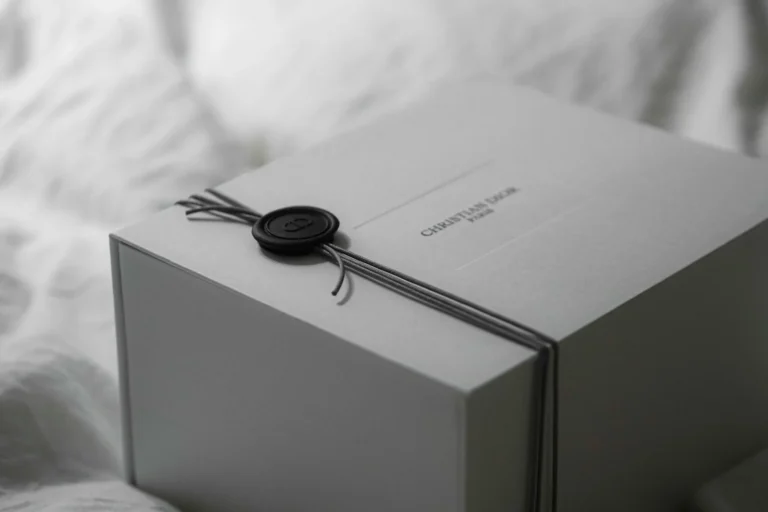
Candles, reed diffusers and car diffusers in the brand scent let customers take the brand home. See corporate gifts in your brand scent.
What makes aroma branding work
- Fit: research on scent in retail consistently finds that a scent congruent with the brand and products works better than one that is merely pleasant.
- Restraint: low, steady intensity. Customers should notice the scent on arrival, then forget it.
- Ownership: agree exclusivity terms so the scent stays yours.
- Quality: fragrance made by a perfume house and formulated within the IFRA Standards, so it performs in diffusion and smells identical in every batch.
In experiments, people remembered more information about a product when it was scented, and the advantage lasted for up to two weeks (Krishna, Lwin and Morrin, Journal of Consumer Research, 2010). Scent fit matters too: a scent congruent with the setting improves evaluations, while one that is merely pleasant does much less (Bosmans, Journal of Marketing, 2006).
Aroma branding in Singapore
Singapore shoppers move between air-conditioned malls, humid streets and MRT stations in minutes, and they encounter a lot of scent along the way. That makes distinctiveness harder, and more valuable. Examples such as Singapore Airlines’ Stefan Floridian Waters and ION Orchard’s scent identity show how a consistent scent becomes part of how a brand is remembered.
If you are ready to develop a signature scent for your business, see our scent branding and signature scent service.
Want customers to recognise you by scent? We develop a brand scent and keep it consistent in every outlet and touchpoint.
Frequently asked questions
What is aroma branding?
Using a distinctive scent as a consistent part of a brand’s identity, so customers associate that scent with the brand.
Is aroma marketing the same as aroma branding?
They are often used interchangeably. Aroma marketing can mean any use of scent to influence customers; aroma branding refers specifically to a scent that identifies the brand.
Can a small business use aroma branding?
Yes. A single boutique or clinic can have a signature scent. The principles of fit, consistency and restraint are the same.
How long before customers recognise a brand scent?
It depends on how often they visit and how consistently the scent is used. Consistency across every location and touchpoint is what builds recognition.
Talk to us about developing a scent for your brand.
Further reading: Brand on Wikipedia.
About the author
Julius Mitchell, Scent Designer
Julius Mitchell is a Scent Designer at Scent Marketing Singapore, where he has worked for four years and oversees every article on this site. He got hooked on the idea that smell is the one sense brands consistently forget to design for, and that a space's fragrance says as much about it as its logo ever could. He writes about the art and science of scent marketing to help Singapore brands think beyond what customers can see.
Ready to give your brand a scent people remember?
We assess your space zone by zone, develop the fragrance with drom, and install, service and calibrate it for you, anywhere in Singapore.
- ✓ Site visit and airflow assessment
- ✓ Fragrances formulated within the IFRA Standards
- ✓ One team responsible for how your space smells
Related articles
 Scent Branding & Signature ScentsThe Fragrance Design Process in Singapore: Why a Brand Scent Takes Months, Not an AfternoonRead more →
 Scent Branding & Signature ScentsLuxury Scented Corporate Gifts in Singapore: Why Your Own Brand Scent Beats a Generic Candle (Car Diffusers, Candles, Reed Diffusers)Read more →
 Scent Branding & Signature ScentsHow to Create a Signature Scent for Your Brand in Singapore, and Why It Takes a Perfume HouseRead more →